
Fire behaviourof tunnel components
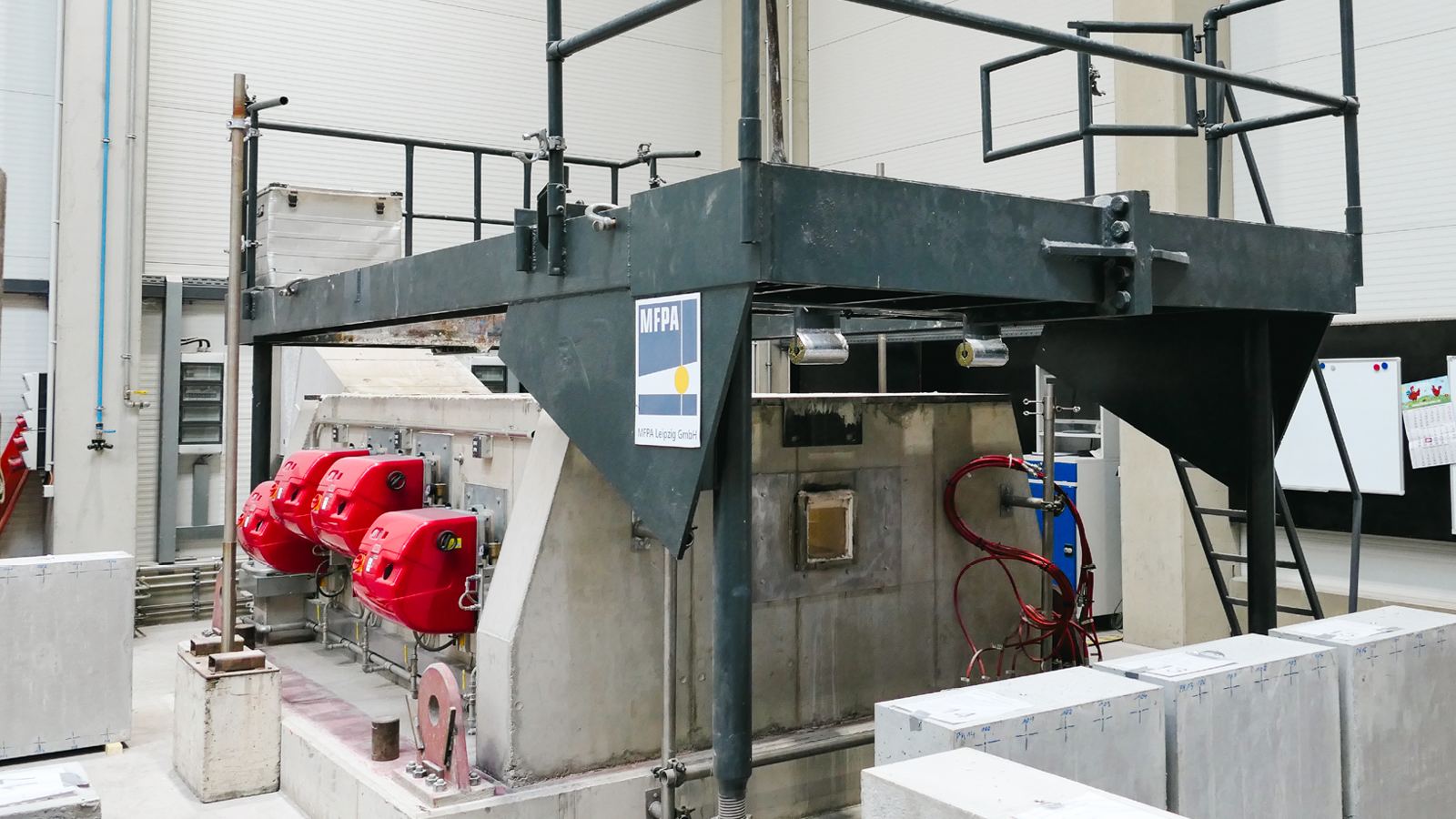
Fire tests are used to determine the fire resistance of tunnel concretes, fire protection systems using plates or plaster, and the preservation of the bearing capacity.
Bridge load testing using the Load testing vehicle (BELFA)

The new BELFA guarantees efficient bridge load testing.
State-of-the-art technology and experienced staff enable us to perform laboratory-quality on-site testing.
EOTA – accelerated facade system testing

Accredited testing of thermal insulation systems and curtain walls in line with various technical specifications on our hygrothermal wall testing station.
Facade firetesting stations

Facade fire testing employs test procedures for assessing the fire behaviour of exterior wall cladding according to different standards and specifications.
High temperature tensile tests at up to 1,350°C

Precise knowledge of the temperature-dependent mechanical characteristics is essential for describing the load-deformation behaviour of steel structures under thermal stress.
In-situ-test stand for noise barriers
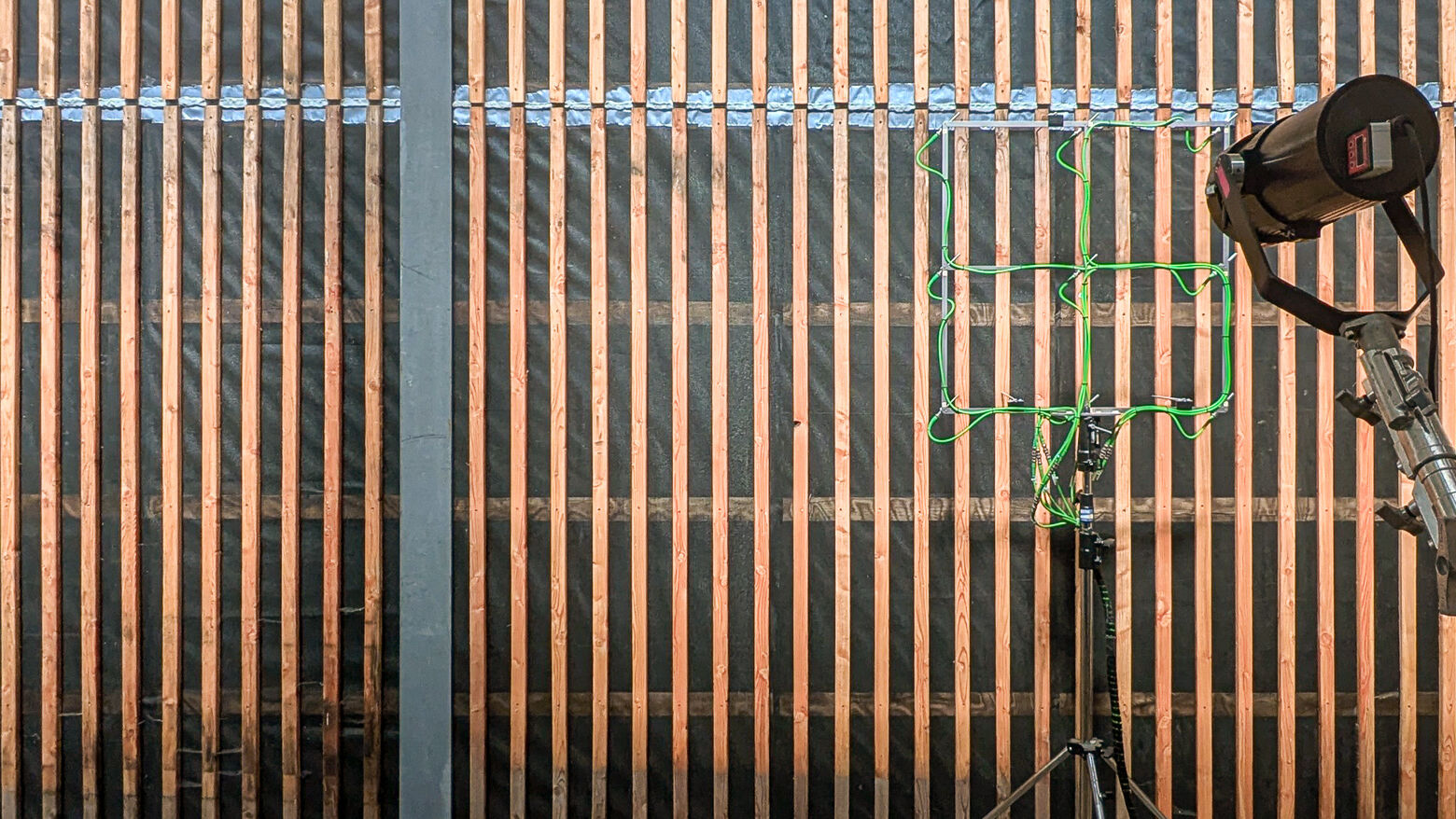
Testing of airborne sound insulation, sound reflection / sound absorption and sound diffraction according to DIN EN 1793-4, DIN EN 1793-5 and DIN EN 1793-6.
Longitudinal wave conduction testing station

Our modern longitudinal wave conduction testing station enables us to perform measurements of flanking transmission of airborne sound, footstep sound and sound of building technology installations in line with the applicable standards.
SEM/EDX-Mircoanalysis and elemental analysis at the highest resolution
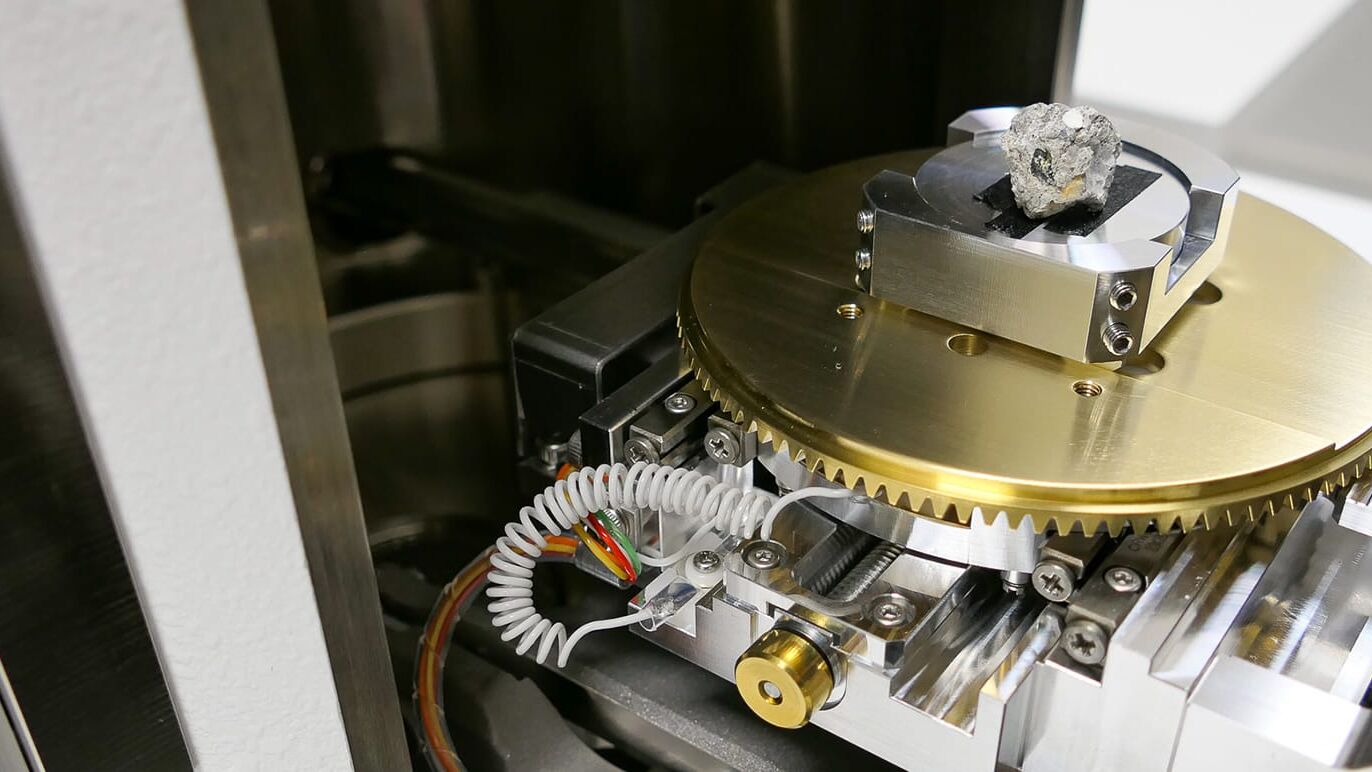
Using our scanning electron microscope, we image surfaces and fracture zones down to the nanometer scale – with high contrast, in great detail, and with analytical data. In this process, a fine electron beam scans the surface, producing high-resolution images.
Thermal resistance of masonry walls
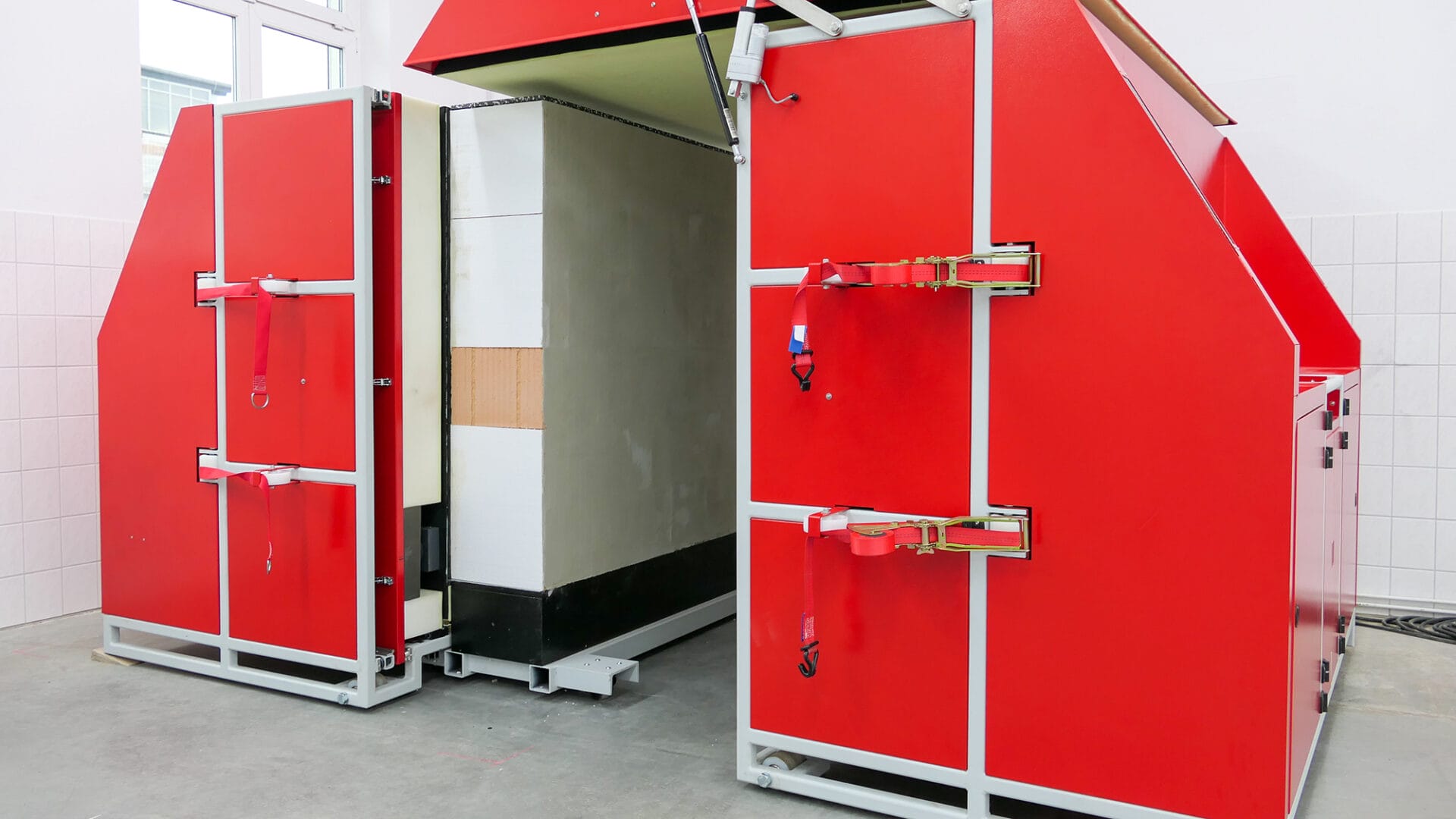
The measurement of thermal resistance of masonry walls according to DIN EN 1934 is one of our accredited test procedures.
XRD - Phase identification and crystal structure analysis
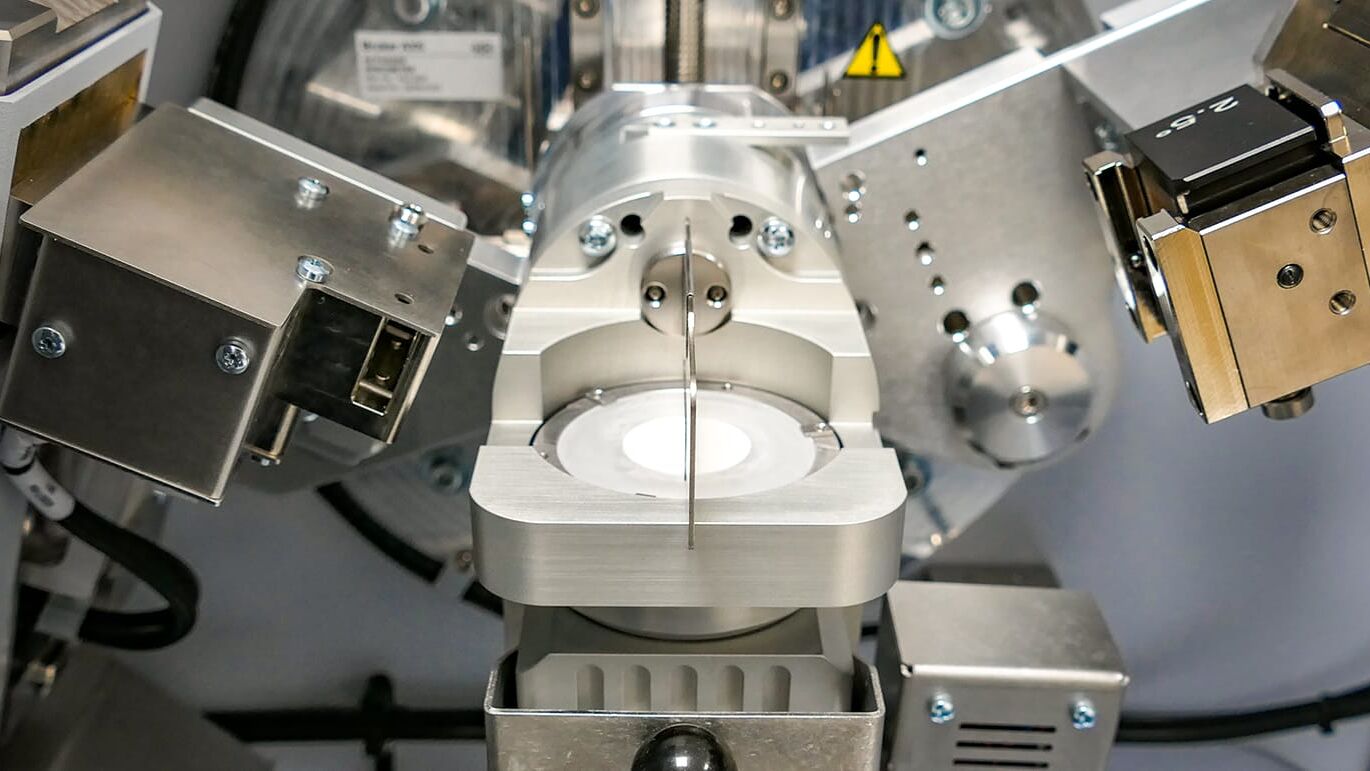
Our X-ray diffraction (XRD) technique enables the precise analysis of crystalline phases. In this process, X-rays are directed at the sample, where they are diffracted by the periodically arranged atomic layers of the crystal lattice.